       | Patellar TendinitisPatellar Tendonitis (Jumper's Knee) OverviewTendonitis of the Patella (also known as Jumper's Knee and Sinding-Larsen-Johansson disease) is a painful condition affecting the patellar tendon (also called the patellar ligament or anterior ligament) in the knee joint. Like all forms of tendinitis, patellar tendinitis is a condition that can flare up and subside over a period of time. Inflammation in the patellar tendon is often due to irritation and/or micro-tearing of the collagen fibers. When the fibers tear, they become weaker, inflamed and swollen causing pain and tenderness in the area. 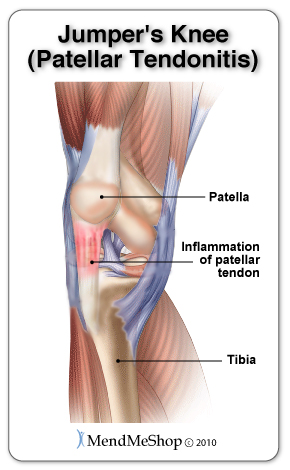 Tendons, by nature, receive very little blood flow. This prevents certain areas of the tendons from getting adequate blood supply in order to repair and maintain the mselves. This makes tendons prone to micro-tearing and inflammation if they are strained or overused. There are 2 types of tendonitis, acute and chronic. Acute tendonitis refers to inflammation that comes on suddenly, usually from a tendon strain or overloading it during exercise. Chronic tendonitis occurs over time and generally results from long term repetitive use of the patella tendon. With both types of patellar tendinitis, scar tissue develops on the tendon as the tears begin to heal. This scar tissue mends the tears in an abnormal way leaving the collagen fibers weaker and less flexible and its presence can result in re-tearing the same small areas over and over. The patellar tendon connects the shin bone (tibia) below the (patella) kneecap to the quadriceps femoris tendon above the kneecap. The fibres of the patellar tendon encase the patella itself, allowing it to glide up and down. The patellar tendon is responsible for extending the knee with the help of the quadriceps femoris tendon which passes down both sides of the patella and the quadriceps femoris muscle in the upper leg - a process known as the quadriceps mechanism. Other conditions which can be a cause of anterior knee pain are commonly confused with patellar tendonitis. These conditions include quadriceps tendonitis, chondromalacia, patello-femoral subluxation and hyper-pressure, fat pad impingement or Hoffa's Syndrome, and patello-femoral arthritis. Patellar Tendonitis CausesPatella Tendonitis is usually caused by repetitive use of the patellar tendon, but can also be caused by trauma such as a blow to the knee. This condition is most common in an athlete who is involved in "jumping" sports such as basketball, gymnastics, figure skating, and volleyball. Other risk factors include: 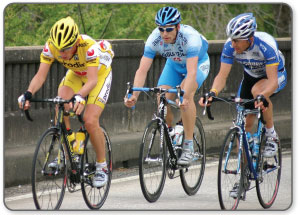
Symptoms of Patellar Tendonitis
Conservative Treatment Options for Jumpers Knee (Patellar Tendinitis)The best way to treat patellar tendonitis is to rest the area, especially avoiding the particular activity that produced the condition. If the strain was minor, the body should be able to heal the tendon fibers normally. Unfortunately, this is not the usual result, due to the injured tendon being used instead of rested. The body heals the injured patellar tendon fibers by binding them together with fibrotic adhesions, or scar tissue. This is a normal, protective response of the body, done in an attempt to prevent further damage to the injured area. Unfortunately, this leads to inflexibility in the knee and possibly chronic knee problems. Although steroid injections may provide temporary relief from the pain of an achilles injury they should generally be undertaken with caution as they weaken the tendon and may lead to a complete rupture. If you do opt for an injection, doctors usually recommend that you do not participate in strenuous activities for several weeks to reduce the risk of a rupture. Conservative Treatment Step 1: Reduce The Initial InflammationInflammation is the body's natural response to an immediate achilles injury and is a normal part of the healing process - helping to reduce tissue infection in the early stages of injury. Swelling, pain, heat sensation, redness, and loss of function are the main symptoms experienced. The combination of rest, topical pain relief cream and minor amounts of cold is the gold standard in medicine for minimizing tissue damage and reducing inflammation after injury or activity. It serves as a critical bridge into the next phase of the healing process. Conservative Treatment Step 2: Enhance Blood Flow to the Injured Soft TissueAfter the inflammation and swelling below your kneecap and around your patellar tendon is gone, you can begin to treat your entire knee with Circulation Boost via use of the TShellz Wrap®. Circulatory Boost increases the amount of blood that flows naturally to your knee to nourish your meniscal cartilage, muscles tendons, and ligaments to speed healing. By treating yourself with Circulatory Boost you can increase your body's blood supply to the knee, boosing your body's natural healing power. In addition, fresh blood flow whisks away dead tissue and toxins that have built up from the tissue damage of patellar tendinitis leaving the area clean and able to heal faster. Our Knee TShellz Wrap provides highly effective, non-invasive, non-addictive pain relief and enhanced blood flow with no side effects. During your recovery, you will probably have to modify and/or eliminate any activities that cause pain or discomfort in your knee until your pain and inflammation settle. Taking the time to care for your knee properly will have your knee back to normal faster and allow you to get back to the activities you enjoy. Conservative Treatment Step 3: Recognize That Healing is a ProcessWith dedication, the right tools, and the right information - you will achieve your goal of a sustainable recovery. A combination approach of cold, heat applications, and functional movements will make it happen much more quickly. Healing takes a comprehensive approach and will differ from person to person. If you have questions, we welcome you to call our office toll-free at 1-866-237-9608 (Continental US), or Internationally at +1-705-532-1671. The best option we came across in our research to accomplish faster healing of soft tissue injuries in the knee is the Knee TShellz Wrap®. Use of this device results in a significant increase in blood flow to the injured tissues located deeper within the body - all in a non-invasive manner.  Have you seen what happens when you add water to a flower wilted from drought? In essence, your injured knee is much like a "wilted" flower; your body wants to heal its injury, but needs lots of nutrients to do it. Blood brings life to your tissue by delivering healing nutrients and oxygen that are vital for their growth and survival. In addition, the blood carries away toxins and waste cleaning the area and healing it faster. Without a good supply of blood, your knee simply won't heal as quickly, opening it up to greater risk of re-injury and/or tendonosis. Pain and Anti-inflammatory (NSAIDs - Non-steroidal anti-inflammatory drugs) can be used if required to help manage your pain. However, these aren't recommended for long term use, as they can cause gastrointestinal difficulties and increase the risk of cardiovascular disease. The use of cold and Circulatory Boost in conjunction with NSAIDs can greatly improve the effect of this medication and can help to heal quicker. The more diligent you are with your treatment and rehabilitation, the faster you will see successful results! With these simple therapies you will notice incredible results in your knee. Remember: We recommend that you visit your doctor and/or physiotherapist before using any of our outstanding products, to make sure they're right for you and your condition. Learn More About Achilles Injuries & TreatmentsI want to learn more about Achilles Surgery & Post-Surgery Recovery I want to learn more about Circulation Boost I want to learn more about Ice & Heat: Which Is Better For The Achilles? I want to learn more about Stretching for the Achilles FREE SHIPPING ON ALL PRODUCTS CURRENTLY ENABLED |

Achilles Tendon Facts There are over 250,000 achilles tendon injuries each year in the US. Achilles tendon ruptures are common in people between the ages of 30 and 50. In runners, too rapid an increase in mileage, hill training without proper strengthening, and recent or inadequate changes to running gear can cause injuries to the Achilles tendon. Achilles tendonitis accounts for an estimated 11% of running injuries. 3-5% of athletes are forced to leave their sports career due to Achilles tendon overuse injuries that go untreated. Medications mask the pain but do very little in the healing of Achilles tendonitis. A fully ruptured tendon REQUIRES surgery. It will not heal on its own. Achilles tendonitis and Achilles tendinitis are the same thing. Continually using your Achilles tendon while it is injured will lead to a more serious and/or chronic injury.      |