       | Anterior Cruciate Ligament (ACL Injury)When you suffer from an Achilles tendon injury, such as tendinitis, an Achilles tendon rupture, Haglund's Syndrome or retrocalcaneal bursitis, your knees may experience unbalanced loads as you favour your sore ankle. This can cause excess strain on one of your knees, over working your ACL (anterior cruciate ligament) and causing it to experience tears. The anterior cruciate ligament (ACL) is the key ligament which bonds together the upper and lower parts of the leg at the knee, stabilizing the knee and limiting the rotation and forward/backward motions. 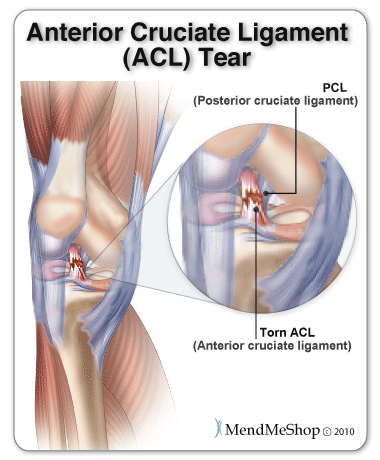 In the United States, it is estimated that ACL injuries happen to 1 in every 3000 people and usually occur when the foot is planted firmly and the knee pivots, twists or overextends suddenly. ACL injuries account for more than two-thirds of all knee injuries in skiers and are fairly common in other sports such as volleyball, basketball, and racket sports. A ruptured ACL is typically diagnosed by a doctor - an MRI exam is advisable, as this can also identify whether the meniscus (cartilage in the knee that provides cushioning) is damaged as well. Some ACL tears caused by a blow to the knee are accompanied by meniscus and MCL tears. When this occurs, it is referred to as the "unhappy triad". If your meniscus is damaged, you should definitely avoid exercises that could aggravate this condition. To prevent ACL injury it is important to have strong quadriceps and hamstrings muscles. Women experience ACL tears 7-8 times more frequently than men due to hormonal and anatomical differences. Women tend to have stronger quadricep muscles at the front of the thigh compared to their hamstrings at the back of the thigh. This creates an imbalance that can increase the stress on the ACL when landing a jump. Once the ACL has been damaged, an individual's risk of developing knee osteoarthritis (degeneration of the joint cartilage) later in life is 9 times higher. If the anterior cruciate ligament is torn, surgery may be recommended by your doctor, however, there are occasions when surgery is not necessary, or not worth the potential for further damage. This is because the ACL is not always crucial for people that do not exercise heavily. As with all recommendations for surgery, it is usually advised to get a second opinion. ACL Injury Symptoms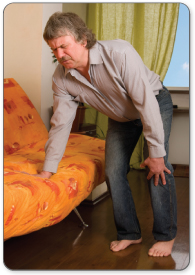 Minor ACL tears may go unnoticed at first but will appear a few hours later with pain and swelling. Even with a slight tear, your knee may feel unstable and may 'give way' with sudden movements. More serious ACL tears or ruptures are accompanied by severe pain and often a popping sound. Swelling in the knee usually gets worse for several hours following an ACL tear, with the most rapid swelling occuring within the first 4 hours. The knee may feel as though something has snapped and walking or bending the knee is usually impossible. ACL Injury DiagnosisTo diagnose an ACL tear, the doctor will move the knee in several positions and examine the knee strength and stability. Common exams used to diagnose an ACL injury include:
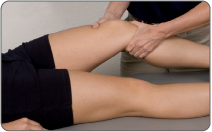 If ACL reconstructive surgery is necessary, remember that proper post-surgery rehabilitation is very important, perhaps even more important than the surgery itself. Activities should set out to promote healing, increase flexibility in the knee and strengthen surrounding muscles. Your physical therapist will probably set up a "passive range of motion" program, and put you in a hinged knee brace for a month or two to prevent hyperextension or hyperflexion in the knee. An important point for ACL patients to remember after surgery is that every effort must be made to increase range of motion and flexibility at the knee. Conservative Treatment Options for ACL InjuriesTreatment differs from case to case depending on the degree of instability in the knee and the patient's activity level. Treating an ACL injury with rest, a Cold Compress or Ice Pack and Circulation Boost will help reduce inflammation and improve the function of the knee so you can return to your normal activities. Once the ACL has improved and activities can be resumed, you will first want to build muscle strength around the knee under the guidance of a physical therapist.  Using these therapies after surgery will also control pain and swelling, reduce tissue damage, and speed the bodys own healing rate (via an increase in blood circulation with the TShellz Wrap®). The elongation and increased elasticity of soft tissue after a TShellz Wrap® treatment will help reduce your risk of reinjury during stretching, and overall, help advance your recovery process. You will have a healthier knee with a greater range of motion than if your recontructed ACL was left untreated. Conservative Treatment Step 1: Reduce The Initial InflammationUsing cold compression immediately following an ACL tear reduces pain and swelling and reduces the tissue damage that occurs with soft tissue injuries like ligament tears. A Cold Compress or Ice Pack allows you to treat yourself in an effective and convenient way following an ACL tear, if re-injury occurs (which is common due to the instability of the knee), or following surgery if it is required. The combination of rest, topical pain relief cream and cold is the gold standard in medicine for minimizing tissue damage, reducing heel pain and reducing inflammation after injury or activity. It serves as a critical bridge into the next phase of the healing process. Conservative Treatment Step 2: Enhance Blood Flow to the Injured Soft Tissue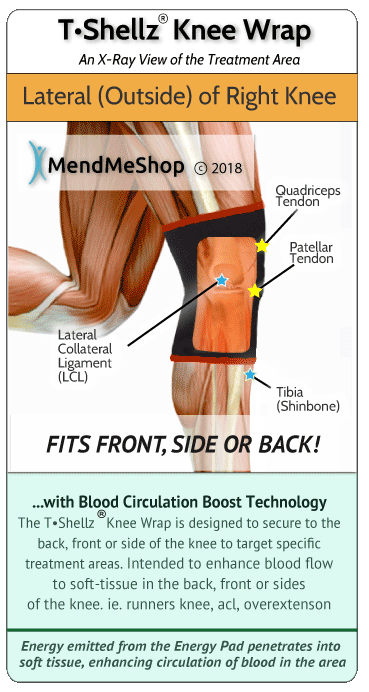 After the inflammation and swelling is gone you can begin to treat your ACL tear with a TShellz Wrap®. The increased blood flow maximizes your own body's ability to repair soft tissue. During your recovery, you will probably have to modify and/or eliminate any activities that cause pain or discomfort in your knee until your pain and inflammation settle. Taking the time to care for your knee properly will have your knee back to normal faster and allow you to get back to the activities you enjoy. The more diligent you are with rest, treatment and rehabilitation, the faster you will see successful results! Surgery and RecoveryIf an injured ligament does not strengthen appropriately or you continue to experience the knee giving way, arthroscopic surgery and ligament reconstruction may be necessary. If ACL reconstructive surgery is necessary, remember that proper post-surgery rehabilitation is very important, perhaps even more important than the surgery itself. 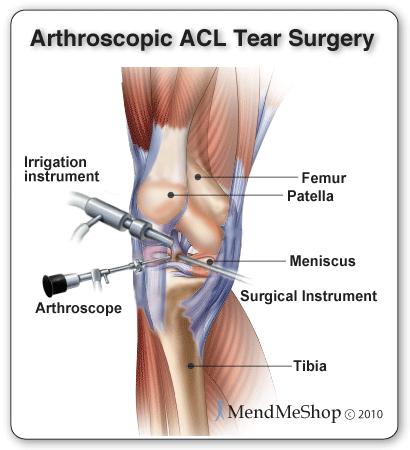 An important point for ACL patients to remember is that after surgery, every effort must be made to increase range of motion and flexibility at the knee. Weakness in the knee can usually be eliminated by extra strengthening exercises, but increased stiffness can sometimes be permanent if not scar tissue is not treated. Not only will the TShellz Wraps help to boost the flow of blood in your knee, but the heat will help increase the range of motion in your joint by increasing flexibility and elongating the surrounding muscles, tendons and ligaments. Ask your physical therapist about the Knee TShellz Wrap to see if it is recommended for your reconstructed ACL! As with all medical devices, make sure your physician approves of any treatment plan you decide to take. If your knee is unstable or weak, wearing a brace during exercise and activity can reduce the risk of reinjury to the ligament while your knee is regaining strength. Learn More About Achilles Injuries & TreatmentsI want to learn more about Achilles Surgery & Post-Surgery Recovery I want to learn more about Circulation Boost I want to learn more about Ice & Heat: Which Is Better For The Achilles? I want to learn more about Stretching for the Achilles FREE SHIPPING ON ALL PRODUCTS CURRENTLY ENABLED |

Achilles Tendon Facts There are over 250,000 achilles tendon injuries each year in the US. Achilles tendon ruptures are common in people between the ages of 30 and 50. In runners, too rapid an increase in mileage, hill training without proper strengthening, and recent or inadequate changes to running gear can cause injuries to the Achilles tendon. Achilles tendonitis accounts for an estimated 11% of running injuries. 3-5% of athletes are forced to leave their sports career due to Achilles tendon overuse injuries that go untreated. Medications mask the pain but do very little in the healing of Achilles tendonitis. A fully ruptured tendon REQUIRES surgery. It will not heal on its own. Achilles tendonitis and Achilles tendinitis are the same thing. Continually using your Achilles tendon while it is injured will lead to a more serious and/or chronic injury.      |