|
|
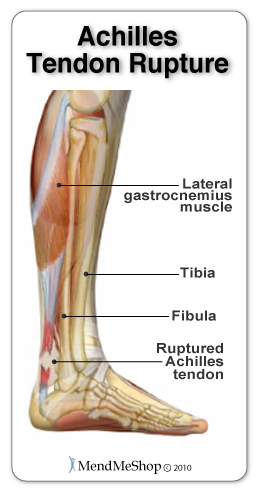
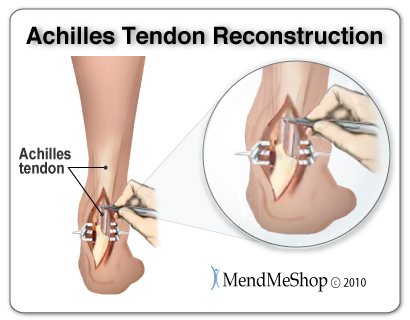
Achilles Tendon RuptureAn Achilles tendon rupture (complete tearing of the tendon) occurs frequently in both professional and recreational athletes. The majority of partial tendon ruptures and around 75% of complete tendon ruptures occur during sporting activities that require quick and repetitive movements like jumping and sprinting. Compared to other tendon ruptures in the body, complete tears in the Achilles tendon tend to occur at a younger age (15 years younger) suggesting overuse and weakening of the Achilles tendon happens faster than other tendons. ![]() The exact cause of a rupture is difficult to say. However, it seems to occur more frequently when the tendon and the gastrocnemius and soleus muscles in the calf are weak. Weaker muscles are shorter and tighter than usually and this causes more stress on the Achilles tendon. A forceful stretch of the tendon while the calf muscles are contracting and the leg is moving forward can cause a rupture to occur. Achilles tendonitis, tendinosis and tenosynovitis should never go untreated because these conditions lead to the weakening of the tendon and possibly a complete rupture. An injured, weakened tendon held together by scar tissue is very susceptible to a rupture because it is not strong enough to withstand the demands placed on it during exercise or everyday activities. The most common location for a tear on the Achilles tendon is at its weakest point, approximately 1.5-2.5 inches above the heel where the blood flow is the lowest in the entire tendon. When a rupture occurs, it will feel as though you were hit in the back of the Achilles and you may hear a popping sound. Although you may actually experience very little pain, once your Achilles tendon ruptures, you will not be able to lift up onto your toes and your ability to walk is affected. A partial tear in the Achilles tendon may be corrected without surgery. However, it may require surgery if it is not treated properly with conservative methods (cold compression therapy, ultrasound therapy and Blood Flow Stimulation Therapy) and it becomes chronic. ![]() A complete Achilles tendon tear is treated with surgery because it increases the probability of returning to the same level of activity and reduces the chance of a re-rupture. Surgery usually entails stitching or screws drilled into the heel bone to re-attach the tendon. Surgeons often reinforce the tendon with tissue grafts to encourage new tissue growth and increase the strength of the tendon to prevent re-rupture. Often scar tissue is scraped off of the Achilles tendon during surgery, however, all of these surgical procedures will result in more scar tissue build up around the tendon, leaving it thick and sometime painful. 70-90% of athletes who undergo Achilles tendon surgery heal well and are able to return to their sport, however, approximately 20% of them have a undergo surgery again due to overuse of the tendon. As with many injuries, it is preferable to avoid surgery at all costs. However, if surgery is necessary, you can take steps prior to and following the procedure to minimize tissue damage, pain and scar tissue and drastically reduce your recovery time. Cold Compression TherapyDoctors recommend using cold compression as soon as possible following an Achilles tendon rupture to reduce pain and swelling and minimize tissue damage that occurs with injuries like tendon tears. Cold compression is also the first therapy recommended following surgery to minimize swelling and pain. Cold Compression Therapy works by interrupting and slowing nerve and cell function in the injured area and reducing swelling that can block blood vessels. This is important because once blood vessels are blocked or damaged, they can no longer carry oxygenated blood through the Achilles tendon and tissue cells begin to break-down. Without cold compression therapy cellular break-down and tissue damage continues as the cells do not get the oxygen they need to survive. By limiting the amount of damage done to your tendon, you also limit the amount of healing that needs to occur. This is a very important step to heal your Achilles tendon faster and with less pain! The Ankle/Achilles Freezie Wrap® allows you to treat your Achilles tendon in an effective and convenient way. The deep cooling effect provided by the Ankle/Achilles Freezie Wrap® slows cell metabolism thereby reducing cellular break-down and tissue damage. Furthermore, because the cold wraps numb the nerves, the wraps also reduce pain! Only the Freezie Wrap® gel pack is charged in the fridge. This means the cooling temperature of the gel pack will not cause cold burns, or cryoburn, on your skin like ice or freezie charged gel packs can. You can also treat yourself for longer periods of time so you get lasting pain relief. After an Achilles tendon rupture and following surgery the Ankle/Achilles Freezie Wrap® is your first line of defence! Ultrasound TherapyFollowing a rupture, your body naturally begins to try to heal your Achilles tendon. During this process scar tissue builds on the tendon limiting the flexibility and movement of your ankle. Fortunately, you can treat your Achilles tendon with therapeutic ultrasound to reduce scar tissue and maintain elasticity and healthier tissue in your tendon. Ultrasound Therapy is recommended both prior to and following Achilles tendon surgery. Using the ultrasound before surgery makes the tendon fibres healthier so less repair and scar tissue scraping is required. The sound waves soften existing scar tissue and prevent new scar tissue from forming, increasing the elasticity of the tendon. With less scar tissue the blood vessels are opened up and the blood flow clears away damaged tissue and reduces inflammation from around the tendon. Following surgery, once the incision has healed and you have approval from your doctor, it is recommended that you begin to treat the scar tissue resulting from the surgery to regenerate softer collagen tissue and prevent further toughening and inflexibility of the Achilles tendon. If you leave the scar tissue untreated, your Achilles tendon heals in a weakened state and your risk of rerupturing the tendon is greatly increased. Ultrasound therapy is the most effective and painless way to treat scar tissue and promote the healing of your Achilles tendon after surgery. MendMeShop® ultrasound therapy is safe, convenient, and easy and generally requires between 5 - 10 minutes per treatment. It is based on a form of deep tissue therapy, which is generated through high frequency sound waves (that we can not hear). These waves send vibrations deep into your body and slightly increase the temperature of your soft tissue cells. The waves are delivered through a hand held transducer and conductive gel that are used together in a slow, circular motion on your skin over the injured area. Ultrasound can also be used to administer therapeutic medicines into the body. This is a process known as phonophoresis. Ultrasound with phonophoresis is rapidly becoming more popular than ultrasound therapy alone. Using MendMeShop® Lavender Infusion Ultrasound Gel during your therapy gives you 2 therapies in 1. You get the benefit of the regenerating sound waves from the ultrasound device itself AND the added bonus of the therapeutic ingredients inside the gel being delivered into the tissue where it is most effective. 1 FREE bottle of MendMeShop® Lavender Infusion Ultrasound Gel comes with every MendMeShop® Ultrasound Therapy System and it contains the therapeutic essential oils of natural Bulgarian lavender, peppermint, eucalyptus, and menthol. Once the swelling, bruising, inflammation and tenderness of your Achilles tendon surgery has been reduced, nourishing and strengthening the tendon tissue and surrounding area is recommended. Using Blood Flow Stimulation Therapy, or BFST®, will speed your recovery and heal your tendon more completely. Blood Flow Stimulation TherapyAfter the inflammation and swelling is gone, you can begin to treat your Achilles tendon with Blood Flow Stimulation Therapy. BFST® increases the amount of blood that flows naturally to your ankle to nourish your tendons, ligaments and muscles to speed healing following surgery. The Achilles tendon naturally receives a limited blood supply compared to other tendons in the body and this significantly reduces its natural ability to heal itself. By treating your Achilles tendon with Blood Flow Stimulation Therapy you can increase your body's blood supply to the ankle and increase your body's natural healing power. In addition, the fresh blood flow whisks away dead cells and toxins that have built up from the injury leaving the area clean and able to heal faster. Our Ankle/Achilles Inferno Wrap® provides effective, non-invasive, non-addictive pain relief and healing with no side effects. With these 3 easy therapies you will notice incredible improvement in your tendon. The more diligent you are with your treatment and rehabilitation, the faster you will see successful results! During your recovery, you will probably have to modify and/or eliminate any activities that cause pain or discomfort in your Achilles tendon until your pain and inflammation settle. Learn More About These SUPERIOR Achilles TreatmentsI want to learn more about The Cold Compression Freezie Wrap® I want to learn more about MendMeShop® Ultrasound Therapy I want to learn more about A BFST® Inferno Wrap® Remember: Always consult your doctor and/or physiotherapist before using any of our outstanding products, to make sure they're right for you and your condition. | Achilles Tendon Facts There are over 250,000 achilles tendon injuries each year in the US. One quarter of Achilles tendon injuries involve professional medical intervention. Males experience Achilles injuries more often than females due to higher participation in sports and genetic difference. Achilles tendonitis accounts for an estimated 11% of running injuries. 3-5% of athletes are forced to leave their sports career due to Achilles tendon overuse injuries that go untreated. Oral Medications can mask the pain but do not aid in the healing of Achilles tendonitis. Anti-inflammatories, cortisone injections, and pain killers can cause Achilles tendonitis to worsen. A fully ruptured tendon REQUIRES surgery. It will not heal on its own. Achilles tendonitis and Achilles tendinitis are the same thing. Continually using your Achilles tendon while it is injured will lead to a more serious and/or chronic injury. ![]() ![]() ![]() ![]() ![]() ![]() ![]() ![]() ![]() |