       | Achilles BursitisSymptoms of Achilles BursitisWhen you suffer from Achilles bursitis it will be most noticeable when you begin an activity after rest: 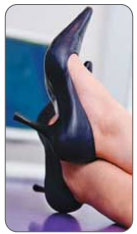
Achilles Bursitis Causes
Bursitis Treatments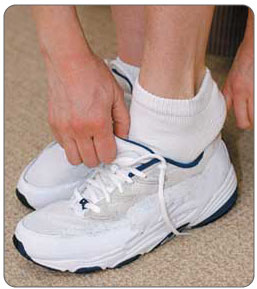 Relieving the symptoms of bursitis initially focuses on taking the pressure off the bursa. This can be done with proper cushioning, inserts, or footwear but may require surgery if it is a bone formation problem (i.e. Haglund's Deformity). If your bursitis is caused by an infection (septic bursitis), the doctor will probably drain the bursa sac with a needle and perscribe antibiotics to treat the infection. For non-infectious bursitis, the preliminary treatment starts with conservative treatment options (click to view). Surgery to remove the inflamed bursa is normally not required for bursitis, however if you fail to see improvement with the conservative treatments, your physician may recommend surgery to remove the bursa completely. Although this removes the problem of an inflamed bursa, you are left with less cushioning in your joint which can lead to other conditions such as fraying of the tendons, muscles or ligaments in the treated area. Eventually, fraying can lead to increasing weakness and rupture in severe cases. The most important factor in healing bursitis is resting your ankle. This can be difficult when you have to carry on with daily activities, but resting and elevating your foot whenever you can is recommended. During your recovery you will probably have to modify or avoid the activities that stress your bursa until your pain and inflammation settle. Treatments should involve decreasing swelling, relieving pain and stress on the ankle, correcting any biomechanical dysfunction (over-pronation or flat feet) and then restoring strength and movement in your ankle. If you are performing an activity that could cause further trauma to the bursa, it is recommended that you protect the area with padding and/or proper footwear to prevent further irritation or damage. Cold CompressionFor years, doctors, trainers, and other medical professionals have recommended RICE (Rest, Ice, Compression, Elevation) to treat the pain and swelling of fresh injuries, chronic pain, and after any re-injury. Cold Compression works by stopping and slowing nerve and tissue function in the injured area and reducing swelling that can block blood vessels. This is important because once blood vessels are blocked or damaged, they can no longer carry oxygenated blood through the tissue and tissue begin to break-down. Without cold compression, damage continues as tissues break-down - they cannot get the oxygen they need to survive. By limiting the amount of damage done to your Achilles Tendon, you also limit the amount of healing that needs to occur. Cooling the bursa as needed throughout the day, for approximately 15 - 20 minutes at a time, is recommended. Applying cold is the first step in treating your bursitis. The TShellz Wrap®Once the inflammation of your bursitis has been reduced with an ice pack or cold compress, it is time to help the body boost its healing process through use of the Achilles TShellz Wrap. It is through the blood the body carries the nutrients and oxygen that injured tissues rely on for recovery.. It is well known that increased blood flow helps your body accelerate the healing process. Unfortunately, when you are suffering from bursitis in your retrocalcaneal bursa and/or subcutaneous calcaneal bursa it is painful to walk and move your foot normally. When you limit movement in your foot the blood flow is reduced, starving your tissue of the necessary oxygen and nutrients. The trick is to find a way to increase blood flow without causing pain and/or further inflaming the bursae. This is where the TShellz Wrap® comes in, helping improve the elasticity of the achilles tendon as well as surrounding soft tissue. Further to this, your injury area will receive a magnified increase in blood flow which will flush toxins that always build up around a soft tissue injury and introduce more nutrients (its in the blood!) to damaged tissues so they can heal at a highly accelerated rate. We guarantee that this will get your bursae and/or Achilles tendon back to normal fast. This is why the TShellz Wrap®is such an important tool. The whole purpose of the wrap is to provide localized heat while also significantly increasing blood flow to tissue in the treatment area. The result of this is as follows:
Circulatory Boost compliments your body's natural healing process by promoting the flow of blood to your foot while you give it the rest it needs. TShellz Wraps® contain a unique, flexible Carbon Fiber Energy Pad which is flexible and will shape to conform to your body. This Energy Pad emits a uniform wave of perfectly safe energy over its entire surface. This energy is absorbed by soft tissue in your achilles and lower leg, opening blood vessels, resulting in an increase in blood flow. Increased blood circulation is what your body needs to accelerate the healing of soft tissue and this is why we recommend the TShellz Wrap®.  With dedication, the right tools, and the right information - you will achieve your goal of a sustainable recovery. A combination approach of cold, deep heat, and functional movements will make it happen much more quickly. In our experience, soft tissue repair rates via conservative home treatment methods using a dedicated, comprehensive approach have surprised many of our clients, but will differ from person to person. In nearly all cases, however, it is very important to stop whatever you were doing that created the injury in the first place (ie. running, jumping, climbing stairs). During your recovery, you will probably have to modify and/or eliminate any activities that cause pain or discomfort in your Achilles tendon until your pain and inflammation settle. The more diligent you are with your treatment and rehabilitation, the faster you will see successful results! Learn More About Achilles Injuries & TreatmentsI want to learn more about Achilles Surgery & Post-Surgery Recovery I want to learn more about Circulation Boost I want to learn more about Ice & Heat: Which Is Better For The Achilles? I want to learn more about Stretching for the Achilles FREE SHIPPING ON ALL PRODUCTS CURRENTLY ENABLED |

Achilles Tendon Facts There are over 250,000 achilles tendon injuries each year in the US. Achilles tendon ruptures are common in people between the ages of 30 and 50. In runners, too rapid an increase in mileage, hill training without proper strengthening, and recent or inadequate changes to running gear can cause injuries to the Achilles tendon. Achilles tendonitis accounts for an estimated 11% of running injuries. 3-5% of athletes are forced to leave their sports career due to Achilles tendon overuse injuries that go untreated. Medications mask the pain but do very little in the healing of Achilles tendonitis. A fully ruptured tendon REQUIRES surgery. It will not heal on its own. Achilles tendonitis and Achilles tendinitis are the same thing. Continually using your Achilles tendon while it is injured will lead to a more serious and/or chronic injury.    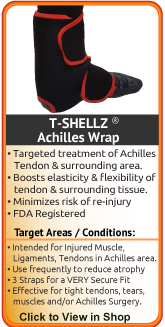  |