       |
Haglund's Syndrome & DeformitySymptoms of Haglund's SyndromeSufferers of Haglund's Syndrome may experience:
Risk Factors for Acquiring Haglund's SyndromeHaglund's Syndrome is a very common runner's injury as well as with other athletes. It often results from sport footwear (i.e. runners, golf shoes or hockey skates) frequently compressing the retrocalcaneal bursa and Achilles tendon while participating in sports. 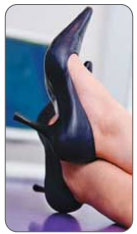 Women aged 15-35 who wear high heeled shoes also have a high incidence of Haglund's Syndrome and Deformity. It is thought that the pressure on the Achilles tendon and retrocalcaneal bursa is made worse by the height of the heel. Due to the relationship between women's shoes and Haglund's Syndrome, the swollen bump that forms at the back of the heel because of this condition is often referred to as "pump bump". It is important to treat Haglund's Syndrome in the early stages to reduce the symptoms, minimize damage and maintain motion and strength in your foot. Resting your ankle, using proper cushioning, wearing comfortable footwear and reducing any activities that add pressure on your retrocalcaneal bursa and Achilles tendon will help to reduce your pain and inflammation. By treating Haglund's Syndrome in the early stages you are more likely to prevent long-term damage and chronic conditions from setting in. Conservative Treatment Options for Haglund's SyndromeRelieving the symptoms of Haglund's Syndrome initially focuses on taking the pressure off the retrocalcaneal bursa and reducing inflammation in the Achilles tendon. This can be done with proper cushioning, inserts, or footwear but may require surgery to reduce the enlarged heel bone if the syndrome is caused by Haglund's Deformity. Preliminary treatment starts with cold. Once initial inflammation has subsided somewhat, begin Circulation Boost treatments to further accelerate the body's own healing process. The most important factor in healing Haglund's Syndrome (Achilles bursitis and tendonitis) is resting your ankle. This can be difficult when you have to carry on with daily activities, but resting and elevating your foot whenever you can is recommended. During your recovery you will probably have to modify or avoid the activities that put stress on your retrocalcaneal bursa and Achilles tendon until your pain and inflammation settle. If you are suffering from subcutaneous bursitis or retrocalcaneal bursitis, there is a high probability you are suffering from achilles tendonitis as well. With bursitis and tendinitis both being soft tissue injuries, rest is recommended, however, some careful movement is required to prevent the joint from freezing and losing range of motion. See your doctor or physical therapist for stretches that will not cause further injury to your achilles. Avoid activities that cause pain or may have caused the injury and begin cold compression treatments as soon as possible. The Achilles tendon and bursae in the heel and foot are difficult to rest as they are essential for walking and daily activities. Fortunately, there are conservative treatment protocols that can help boost blood circulation in the Achilles region, strengthening the ability of the body to heal soft tissue. We feel this can help you get back to a life without pain and risk of further injury. The use of a TShellz Wrap® (Circulatory Boost) increases elasticity of soft tissue while promoting blood flow (vasodilation) at the treatment site. Although steroid injections may provide temporary relief from the pain of an a soft tissue injury in the achilles and heel, they should generally be undertaken with caution as they weaken strained tendons... and may lead to a complete rupture. If you do opt for an injection, doctors usually recommend that you do not participate in strenuous activities for several weeks to reduce the risk of a rupture. Conservative Treatment Step 1: Reduce The Initial InflammationInflammation is the body's natural response to an immediate achilles injury and is a normal part of the healing process - helping to reduce tissue infection in the early stages of injury. Swelling, pain, heat sensation, redness, and loss of function are the main symptoms experienced. The R.I.C.E. (rest, ice, compression, eleveation) treatment philosophy is used to decrease inflammation and relieve the pain of Haglund's Syndrome quickly when your retrocalcaneal bursa and Achilles tendon are inflamed and painful.
Applying cold to your Achilles bursa and tendon will decrease the swelling and redness at the back of your heel. In addition, it will numb the pain in your heel and help to control the inflammation. Simply, apply cold to your ankle as needed throughout the day, for approximately 10-15 minutes at a time. The combination of rest, topical pain relief cream and cold is the gold standard in medicine for minimizing tissue damage, reducing heel pain and reducing inflammation after injury or activity. It serves as a critical bridge into the next phase of the healing process. Conservative Treatment Step 2: Enhance Blood Flow to the Injured Soft TissueOnce the inflammation in the heel bursae and tendons have been reduced, nourishing and strengthening the injured soft tissue is recommended. When you have a tendon or bursa injury, there is not much blood flow in these areas as these are dense soft tissue. Inflammation and reduced movement (lack of activity or on-going immobility) reduces the flow of blood to an area that is already receiving very little blood flow. If the joint in this area is active, you run a risk of increasing the severity of the injury. If there has been some healing, you could sustain a re-injury all over again. It is through the blood the body carries the nutrients and oxygen that injured tissues rely on for recovery.. It is well known that increased blood flow helps your body accelerate the healing process. This is why the TShellz Wrap®is such an important tool. The whole purpose of the wrap is to provide localized heat while also significantly increasing blood flow to tissue in the treatment area. The result of this is as follows:
Conservative Treatment Step 3: Recognize That Healing is a ProcessWith dedication, the right tools, and the right information - you will achieve your goal of a sustainable recovery. A combination approach of cold compression, heat treatments, and functional movements will make it happen much more quickly. Healing takes a comprehensive approach and will differ from person to person. 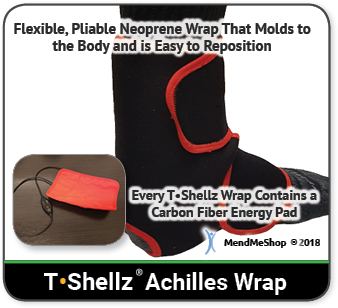 The Achilles TShellz Wrap® - A Healthy Achilles and Heel For The Long TermThe best option we came across in our research to accomplish effective blood flow to soft tissue in the achilles area at home is the Achilles TShellz Wrap®. Use of this device results in an increase of blood flow within the treatment area - all in a non-invasive manner. Have you seen what happens when you add water to a flower wilted from drought? In essence, your injured achilles is much like a "wilted" flower; your body wants to heal its injury, but needs lots of nutrients to do it. Blood brings life to your tissue by delivering healing nutrients and oxygen that are vital for their growth and survival. In addition, the blood carries away toxins and waste cleaning the area and healing it faster. Without a good supply of blood, your achilles simply won't heal properly. Using a TShellz Wrap® will not expose you to the risk of causing further harm to soft tissue like you can when using rigorous exercise. The Achilles TShellz Wrap® accomplishes the goal of enhanced blood flow without the need for intensive exercise and as such reduces your risk of re-injury. This wrap is intended to be an effective method to treat your swollen and painful bursa, reduce the inflammation in your tendon and improve the health of soft tissue in your ankle. Pain and Anti-inflammatory (NSAIDs - Non-steroidal anti-inflammatory drugs) can be used if required to help manage your pain. However, these aren't recommended for long term use, as they can cause gastrointestinal difficulties and increase the risk of cardiovascular disease. The use of cold compression and Circulatory Boost in conjunction with NSAIDs can aid greatly in your recovery. Using a TShellz Wrap® will not expose you to the risk of causing further harm to soft tissue like you can when using rigorous exercise. The Achilles TShellz Wrap® accomplishes the goal of enhanced blood flow without the need for intensive exercise and as such reduces your risk of re-injury. Learn More About Achilles Injuries & TreatmentsI want to learn more about Achilles Surgery & Post-Surgery Recovery I want to learn more about Circulation Boost I want to learn more about Ice & Heat: Which Is Better For The Achilles? I want to learn more about Stretching for the Achilles FREE SHIPPING ON ALL PRODUCTS CURRENTLY ENABLED |

Achilles Tendon Facts There are over 250,000 achilles tendon injuries each year in the US. Achilles tendon ruptures are common in people between the ages of 30 and 50. In runners, too rapid an increase in mileage, hill training without proper strengthening, and recent or inadequate changes to running gear can cause injuries to the Achilles tendon. Achilles tendonitis accounts for an estimated 11% of running injuries. 3-5% of athletes are forced to leave their sports career due to Achilles tendon overuse injuries that go untreated. Medications mask the pain but do very little in the healing of Achilles tendonitis. A fully ruptured tendon REQUIRES surgery. It will not heal on its own. Achilles tendonitis and Achilles tendinitis are the same thing. Continually using your Achilles tendon while it is injured will lead to a more serious and/or chronic injury.    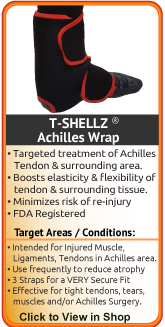  |